Angkor Wat Visitor Guide: What to Wear, What to Bring, and Photo Tips
Table of Contents
Visiting Angkor Wat in Siem Reap: How to Prepare for Your Temple Visit
Visiting Angkor Wat in Siem Reap, Cambodia is one of the highlights of any trip to Southeast Asia. As the largest religious monument in the world and the most famous temple in the Angkor Archaeological Park, Angkor Wat attracts millions of visitors every year who come to experience its ancient architecture, sunrise views, and iconic temple reflections.
If you are planning to visit Angkor Wat, it is worth thinking about what to wear at the temples before you arrive. Clothing choices at Angkor Wat are important for several reasons. There is an official Angkor Wat dress code, the tropical Cambodian climate can be very hot and humid, and many visitors also want to capture beautiful photos during their visit. Choosing the right outfit can make your temple visit more comfortable while also helping you create memorable photographs.
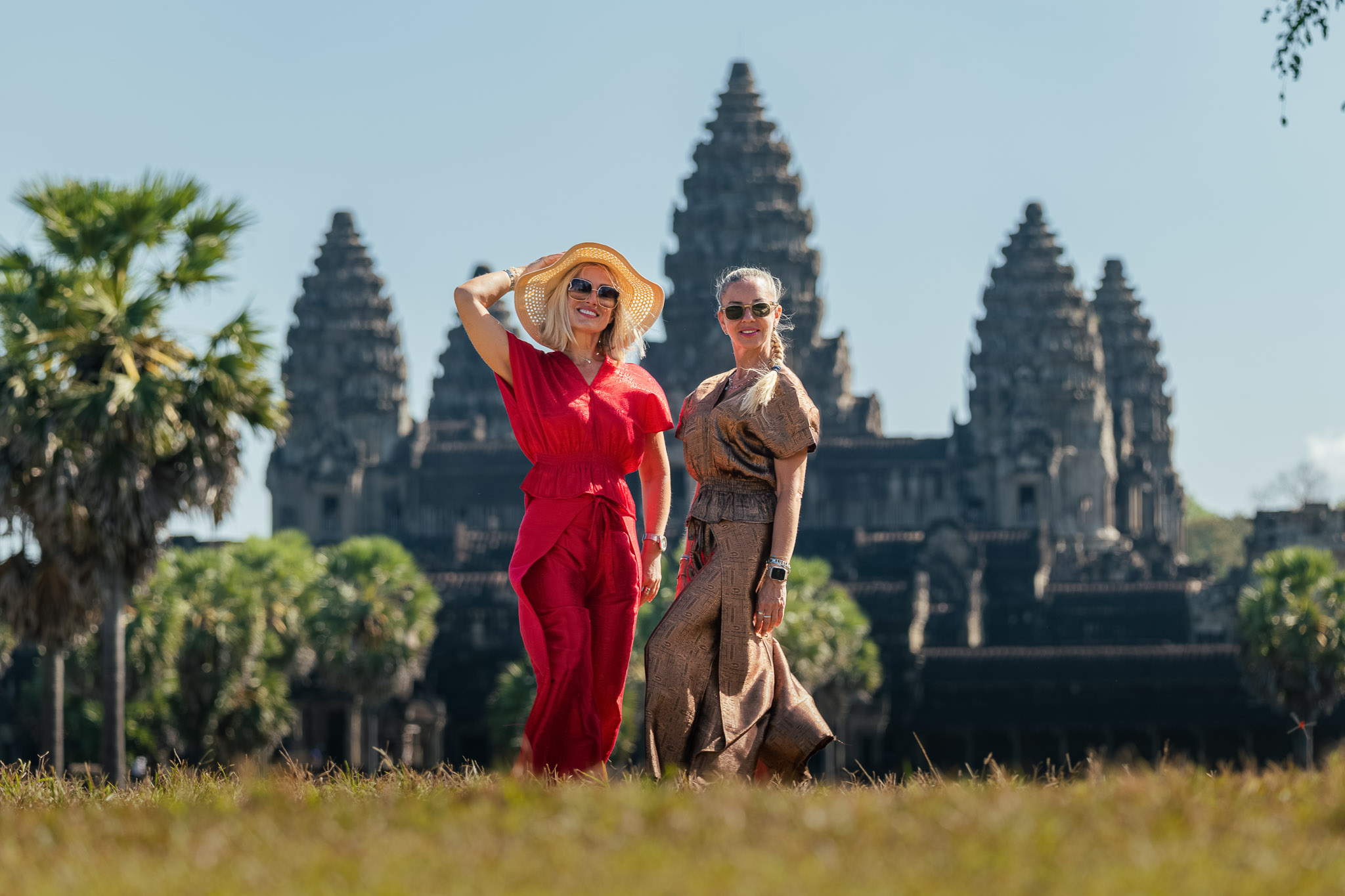
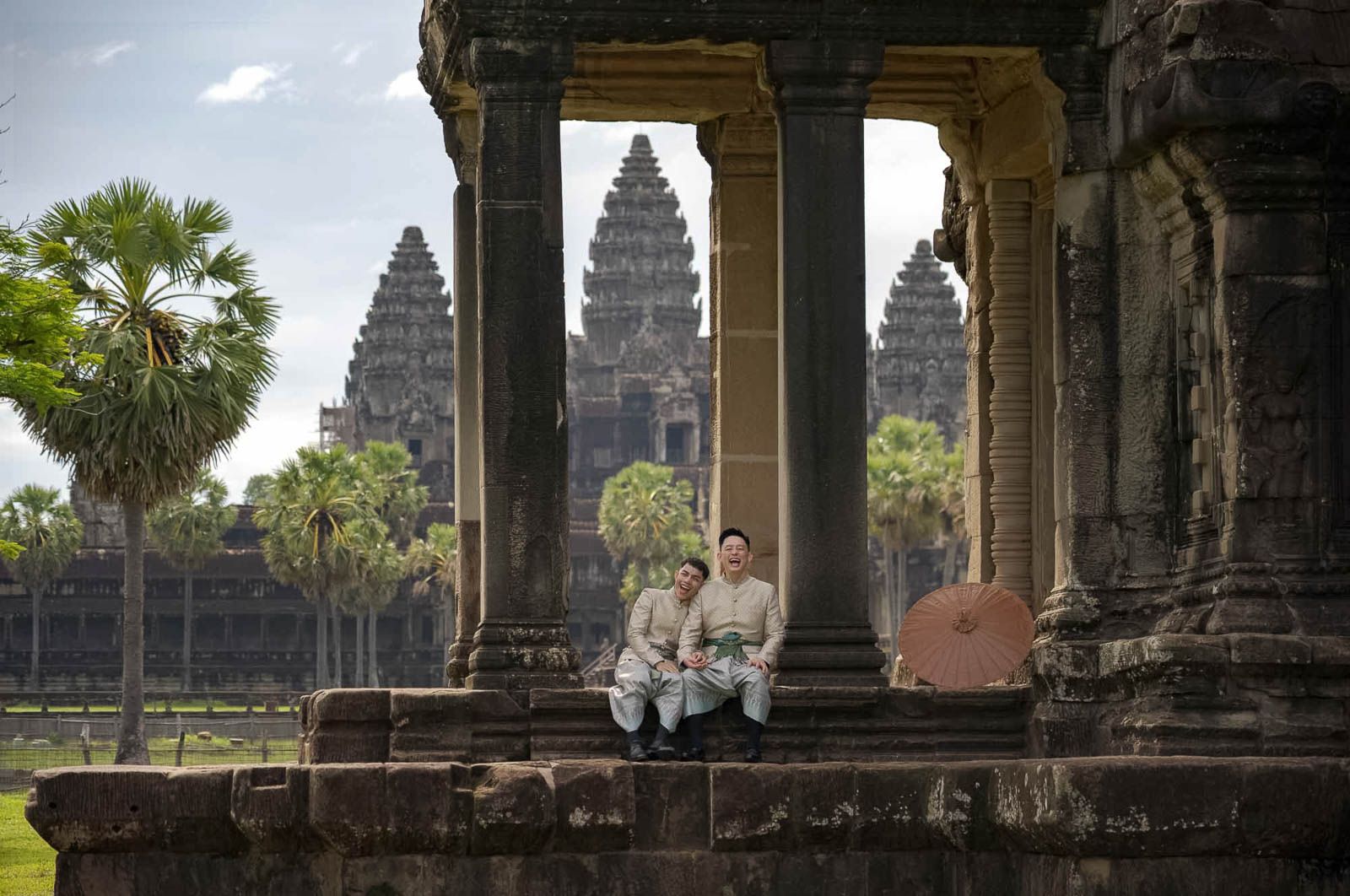
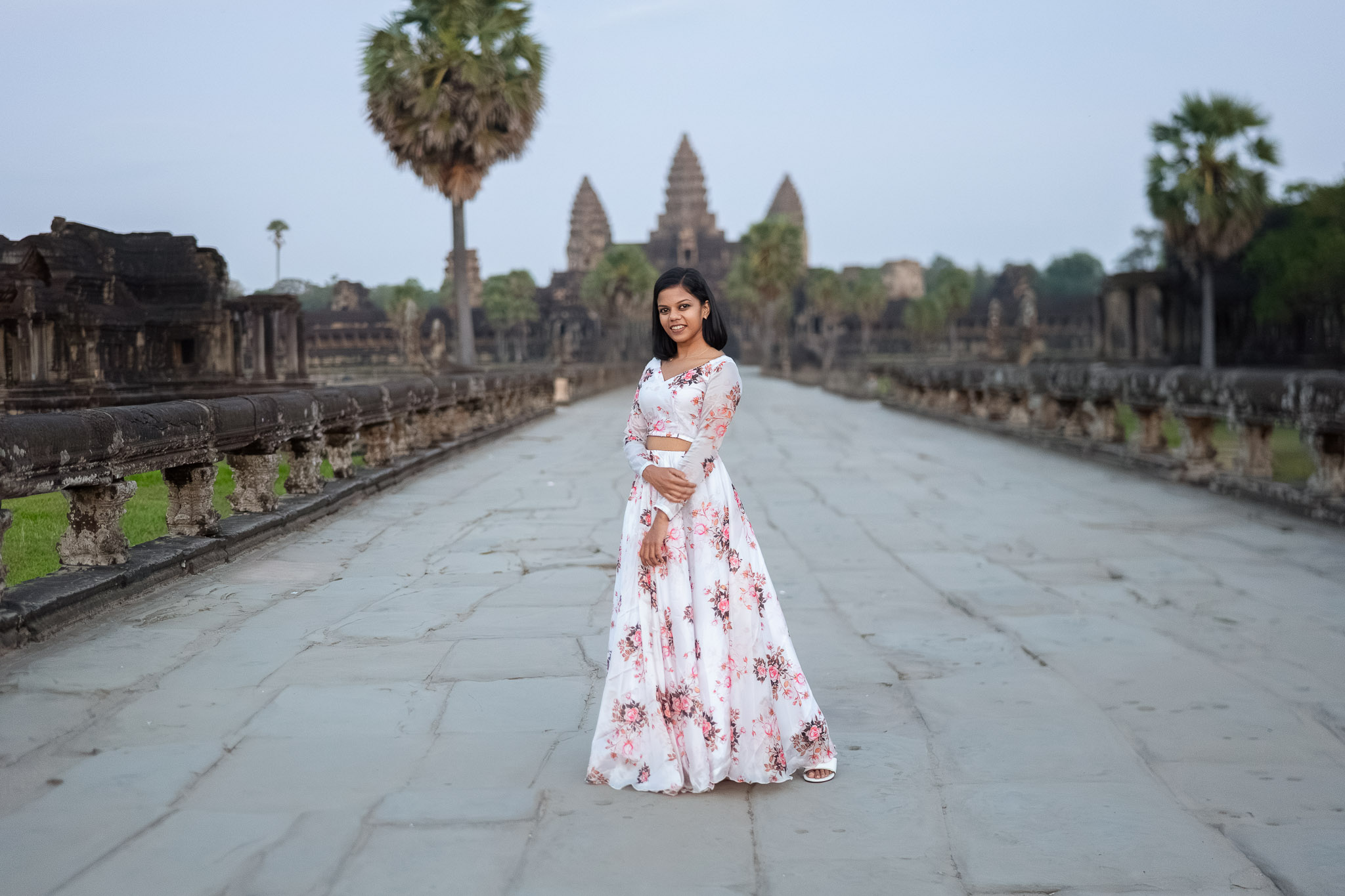
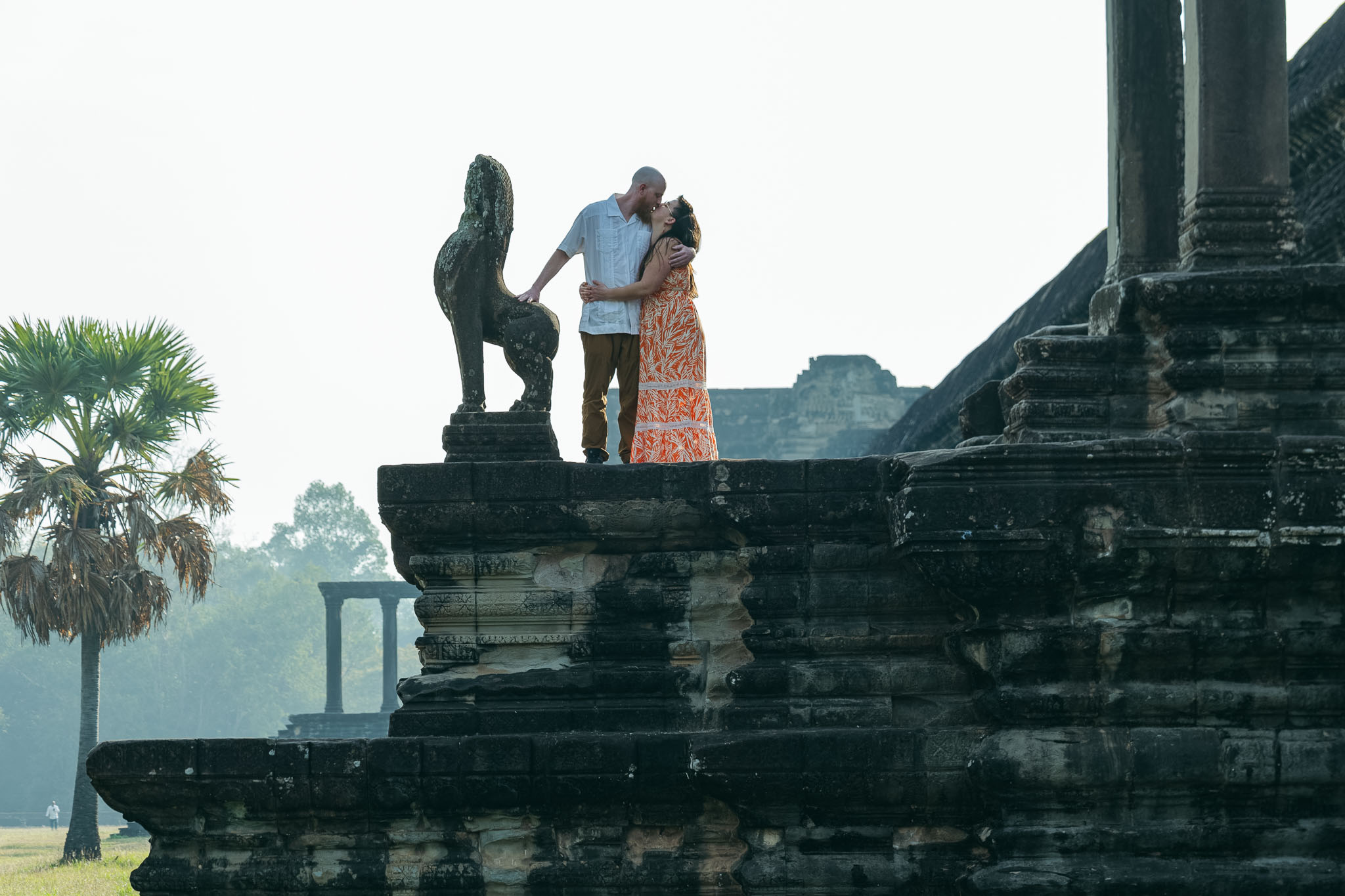
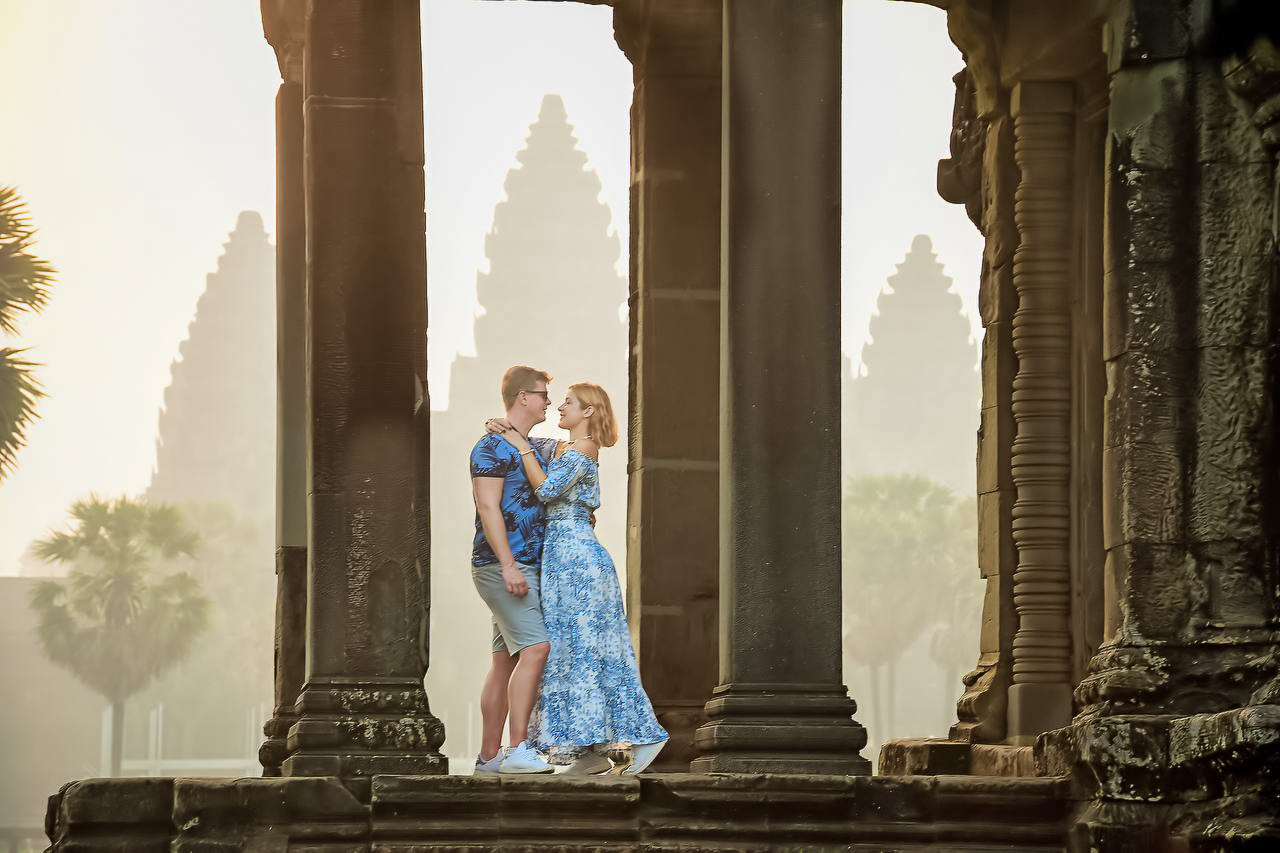
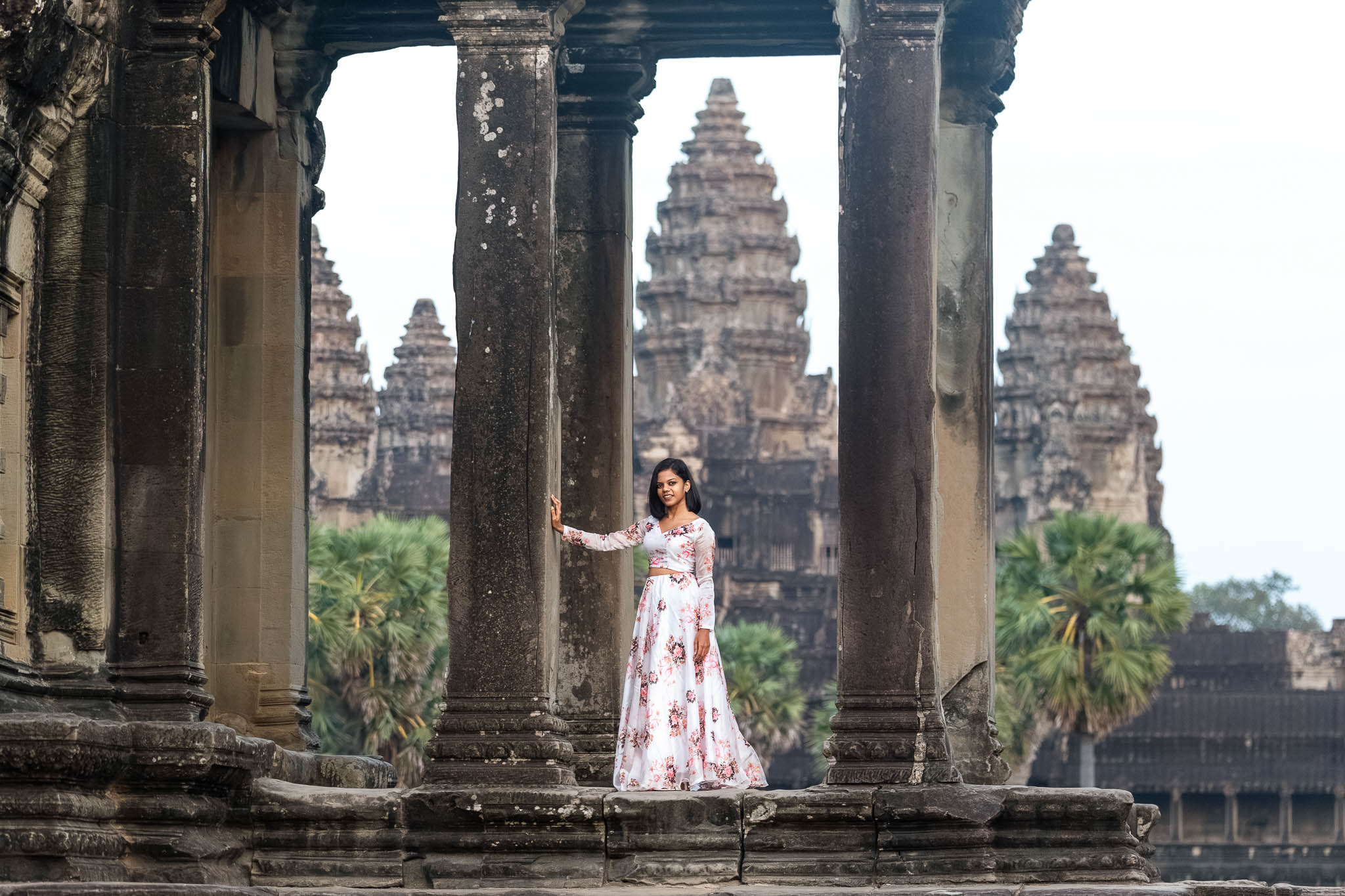
Many travelers also choose to capture their visit with an Angkor Wat photoshoot during sunrise or early morning, when the temples are at their most atmospheric. Whether you are taking your own photos or booking a professional Angkor Wat photographer, wearing the right colours, fabrics, and styles can make a significant difference to how your photos look against the sandstone temples and jungle surroundings.
In this guide, we explain what to wear at Angkor Wat, including the temple dress code, practical clothing tips for visiting the temples, and outfit ideas that work especially well for Angkor Wat photography. Whether you are visiting for the first time, planning sunrise at Angkor Wat, or considering a professional photoshoot, these tips will help you prepare for your temple visit in Siem Reap.
Preparing for Your Visit to Angkor Wat
A little preparation before visiting Angkor Wat can make a big difference to your experience on the day, especially if you are planning to arrive early for sunrise.
The first thing to organise is your entrance ticket. Angkor passes can be purchased at the official ticket office, located a short drive from the main temple area, but I recommend buying your Angkor ticket a few days ahead, online. If you do buy it from the ticket center, it’s best to buy your ticket the day before if you plan to visit at sunrise, as this saves time in the morning and allows you to go straight to the temple when it opens.
You can buy your Angkor pass online, here.
It’s also worth planning your transport in advance. Whether you are travelling by tuk tuk, private car, or with a driver, confirming your pickup time the night before helps avoid delays. For sunrise visits, most people leave their hotel between 4:30–5:00am.
Make sure you bring:
- your Angkor ticket (or plan to purchase it the day before)
- water, as it gets hot quickly
- comfortable clothing suitable for temple dress rules (covered shoulders and knees)
Arriving prepared means you can focus on exploring the temple and getting the most out of your time at Angkor Wat without unnecessary stress or delays.
What Time Should You Arrive at Angkor Wat for Sunrise?
If you are planning to see sunrise at Angkor Wat, aim to arrive at the ticket checkpoint by around 4:45–5:00am. The temple gates open at 5:00am, and people begin queueing before this.
Getting inside early allows you to walk to the main temple in low light and choose your position before the main crowd builds up. By 5:30–6:00am, the area around the reflecting pool becomes crowded, especially during peak season.
The sky usually starts to show light at around 6:00am, although colours vary depending on the conditions. Some mornings are vibrant, while others are more subtle.
The Angkor Visitor Code of Conduct
What to Wear When Visiting Angkor Wat
When visiting Angkor Wat in Siem Reap, it is best to dress for the heat and humidity of Cambodia’s tropical climate. Lightweight, breathable clothing will help you stay comfortable while exploring the temples. Materials such as cotton, linen, or other light fabrics work well because they allow air to circulate and help keep you cool during the day.
Even visitors from hot countries are sometimes surprised by the conditions at Angkor Wat. The air can be very still inside the temple complex, and there is of course no air conditioning at the temples. As the sun rises, the ancient sandstone structures absorb and radiate heat, which can make the temperature feel much warmer than expected. Choosing loose, comfortable clothing will make it much easier to enjoy walking around the temples.
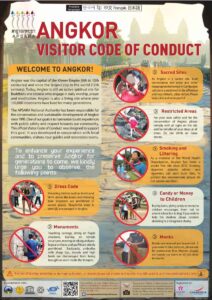
It is also important to keep in mind the Angkor Wat dress code. Visitors entering the main temple areas are required to have their shoulders and knees covered. This applies at Angkor Wat and other temples within Angkor Archaeological Park. Sleeveless tops, short shorts, or very short skirts may prevent you from entering certain temple structures. Wearing lightweight trousers, longer shorts, or a skirt that reaches the knees, along with a shirt that covers the shoulders, will ensure you can explore the temples without any issues.
If you are planning an Angkor Wat photoshoot, it is also worth thinking about colours and fabrics that handle heat well. Some materials show sweat very easily, particularly light grey or certain synthetic fabrics. Choosing colours and fabrics that do not easily show sweat will help you stay comfortable and confident during your photos.
Practical considerations are also important. The ground around the temples can sometimes be dusty or muddy, especially during the rainy season, so comfortable footwear that you do not mind getting a little dusty is a good idea. Many visitors also bring a light scarf or shawl, which can be useful for sun protection or for easily covering your shoulders when entering temple areas that require the Angkor Wat dress code.
If you are doing a photoshoot at Angkor Wat, bringing a small bag can also be helpful. This allows you to keep items such as your phone, sunglasses, or small personal belongings safely stored while you are taking photos, so you can move around the temples comfortably without carrying things in your hands.
The Angkor Visitor Code of Conduct
How to Get Better Photos at Angkor Wat
Getting strong photos at Angkor Wat is less about equipment and more about timing, positioning, and awareness of your surroundings. Most of what makes the difference is knowing a few things before you arrive.
How to Get Better Photos at Angkor Wat
Most visitors head straight for the pond on the left as you enter, because it gives the classic view of the temple reflected in the water. It is also where the biggest crowd gathers. If you want more room, try the second pond further back, or walk along the edge of the first one to find a gap. Arriving early matters more than the exact spot, since a good position at 5:15am is easier to get than a slightly better one at 5:45am.
Keep in mind that the sun rises behind the temple, so the front is often in shadow at sunrise. You will get silhouettes and colour in the sky, but not much detail on the stone. For the temple lit up properly, mid to late morning or the late afternoon works better.
The reflection depends on the season
The pond can be low or patchy in the dry season, and the reflection is not guaranteed. If a perfect mirror shot is the main reason you are going, set your expectations accordingly. Cloud cover also changes sunrise a lot, so treat the colour as a bonus rather than something to plan around.
Which temple at what time
Bayon is best in the morning, when the light gets in between the towers and brings out the faces. Ta Prohm is the one for jungle and root shots, and it works well early, before the tour groups arrive, because the filtered light under the trees is softer than it looks at midday. Midday at any of the temples is harsh, with strong shadows and tired-looking skin, so it is a good time for lunch and a rest.
Camera and phone tips
If you are coming from an air-conditioned car or hotel, your lens can fog up for a few minutes in the humid air. Give your camera or phone a few minutes to adjust before you start shooting. On a phone, tap on the brightest part of the sky and then lower the exposure slightly, so the sunrise colours do not blow out. Wipe the lens as well, because sunscreen and sweat leave a film that softens everything.
Respect and etiquette
Ask before photographing monks, and do not climb on or pose over restricted areas of the temple. Try not to block walkways or narrow corridors for a shot, since other people are trying to move through. If you want to fly a drone, check the current rules with the Apsara Authority first, as these have changed in the past.
DIY or a professional shoot
Taking your own photos works well for a lot of people, and the tips above will help. If you want photos of yourselves together, and not just of the temple, a local photographer who knows the light and the quiet spots can get you better results in less time, because you can stay in the moment instead of setting up a phone on a rock. If that sounds useful, you can hire a professional photographer at Angkor Wat or get in touch to check availability.
What to Bring When Visiting Angkor Wat
When planning a visit to Angkor Wat and the temples of Angkor in Siem Reap, it helps to bring a few practical items to stay comfortable while exploring the temple complex. The weather in Cambodia is hot and humid for much of the year, and visitors often spend several hours walking between temples.
Lightweight clothing, sunscreen, and a hat are all useful when visiting Angkor Wat. Comfortable walking shoes are also recommended, as the paths around the temples can be uneven, dusty, or muddy depending on the season.
Many visitors also bring a small bag or backpack to carry essentials such as water, sunglasses, sunscreen, and a phone or camera. If you are planning an Angkor Wat photoshoot, a small bag can also be convenient for storing personal belongings while you take photos. It allows you to place items safely to one side rather than holding them during the session.
If you are visiting the temples with a private driver or car, which is very common when exploring Angkor, you can also leave larger belongings in the vehicle while walking around the temples. This makes it easier to move around the temple grounds comfortably without carrying unnecessary items.
Bringing only what you need will help you enjoy your time exploring Angkor Wat, Angkor Thom, and the surrounding temples, while staying comfortable in the tropical climate of Siem Reap.
Beware of the Monkeys
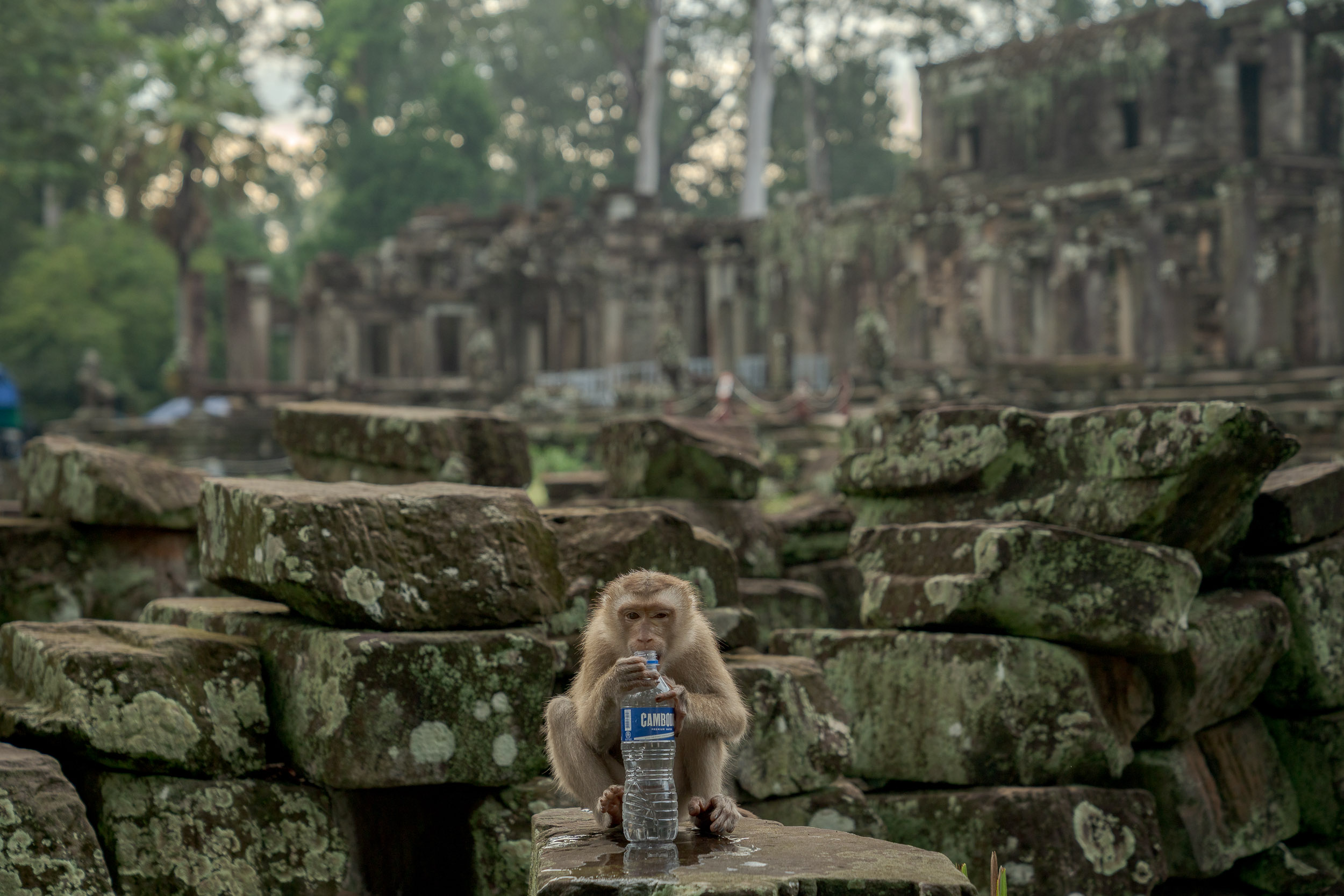
When visiting Angkor Wat and the temples of Angkor in Siem Reap, you may come across one of the temple complex’s most entertaining residents, the long-tailed macaques. They are not dangerous, but they are clever and very interested in food.
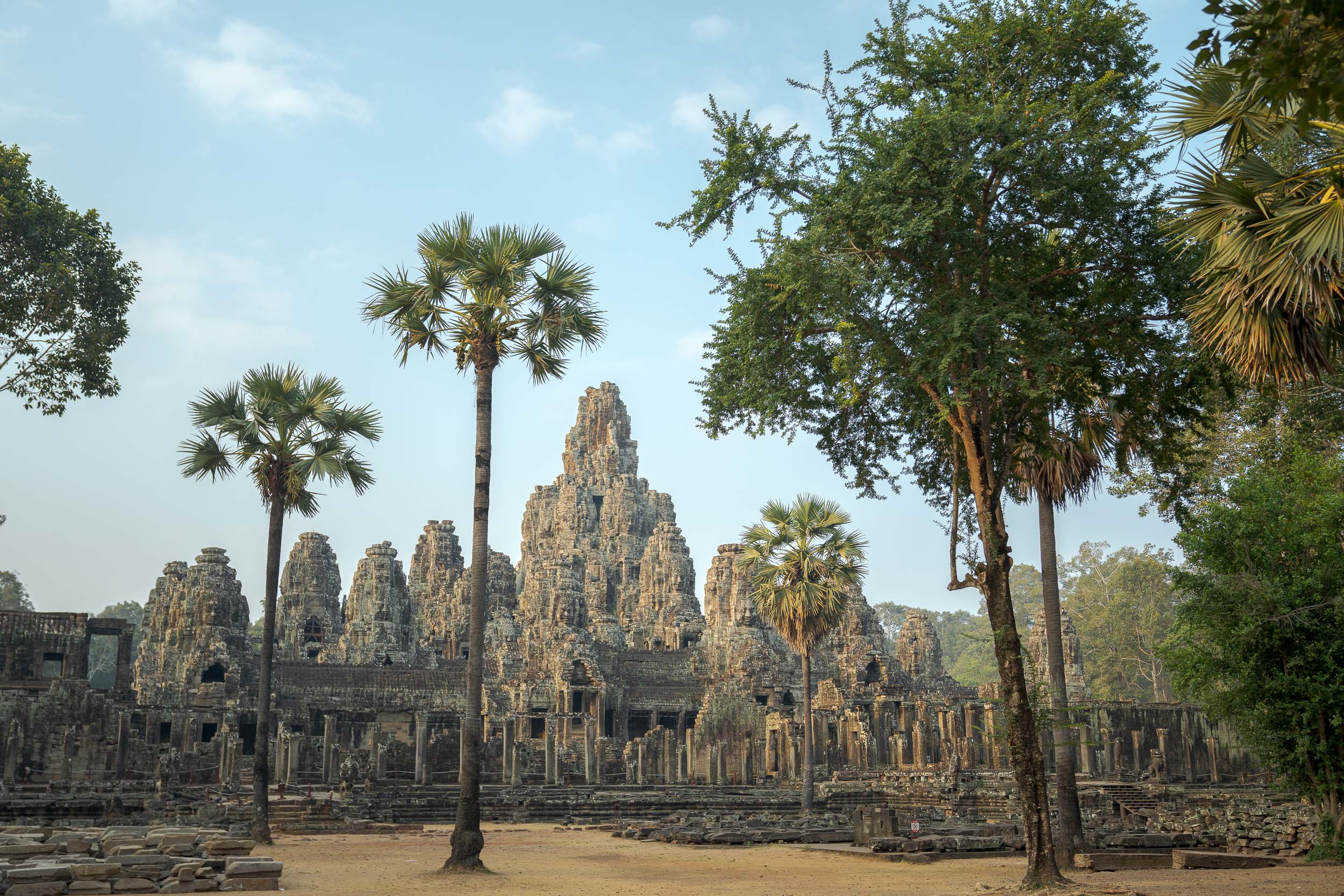
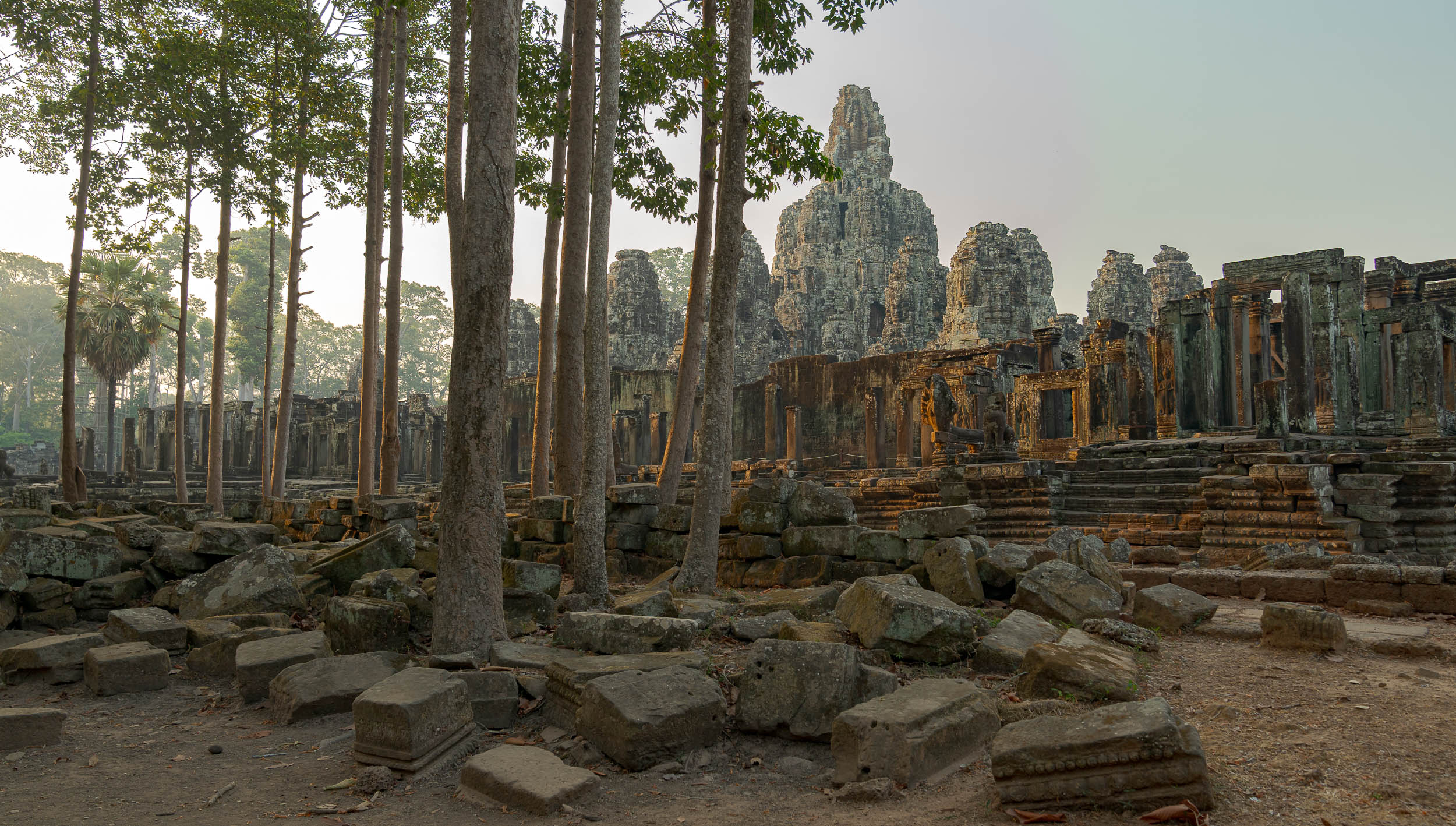
These monkeys are most commonly seen around Angkor Wat and Bayon Temple in Angkor Thom. The group at Bayon tends to be the most confident around visitors and they sometimes wander close to tourists exploring the temple grounds.
For many travellers reading a guide to Angkor Wat, seeing monkeys is part of the experience. It is also one of those things to know before visiting Angkor Wat, especially if you are carrying snacks or drinks while walking around the temples.
In most cases the monkeys are simply hoping for food. However, they occasionally grab things like sunglasses, water bottles, hats, or even skincare products. Not because they want them, but because they have learned that people will often offer food in exchange to get their belongings back. They are surprisingly good negotiators.
Tips for Visiting Angkor Wat Around Monkeys
If you see monkeys while exploring Angkor Wat or Bayon Temple, a few simple tips for visiting Angkor Wat will help you avoid any trouble.
• Do not carry visible food, especially bananas or snacks
• If a monkey approaches while you are holding food or a drink, drop the item and step away calmly
• If a monkey jumps on you, stay still and avoid sudden movements
• If a monkey takes something from you, temple security guards are usually nearby and can help
Most visitors exploring the Angkor temples in Siem Reap will see monkeys at some point, but problems are rare. As long as you avoid carrying food and keep a respectful distance, they are simply another interesting part of visiting Angkor Wat and Angkor Thom.
And if you spot one sitting quietly on the ancient stones of the temples, it can actually make for a memorable photo. Just keep your snacks safely out of sight.
More Angkor Wat Resources
If you haven’t bought your pass yet, you can get it from the official Angkor ticket site. Buying online a few days ahead saves you queuing at the ticket center, and it’s the only place I’d recommend buying from.
For more information about Angkor Wat and the Angkor temples, you can find a detailed guide on Connect Cambodia’s Angkor Wat Guide. It covers Angkor Wat in detail, including how to plan your day, how to get between the temples, and what to expect on the ground. If you’re putting together an itinerary, start there.
Trustindex verifies that the original source of the review is Google. Such an incredible experience! We are so happy with our amazing pictures that we will treasure foreverPosted on GoogleTrustindex verifies that the original source of the review is Google. Amazing photography! And thanks so much for capturing great memories!Posted on GoogleTrustindex verifies that the original source of the review is Google. The photos were lovely and I had a great experience.Posted on GoogleTrustindex verifies that the original source of the review is Google. Photographer Nut was great, professional, he took beautiful photos, the organization of the photo shoot was perfect, he waited for us at the place we agreed on, he devoted the whole time to us and even as a person he was great, kind, smiling, patient. I recommend this photo shoot to everyone, you will have memories for a lifetimePosted on GoogleTrustindex verifies that the original source of the review is Google. Had a good experience with this company. their communication was fantastic and my photographer was at Angkor Wat on time as expected. The photos were great, and it worked out way cheaper than alternatives. Highly recommended.Posted on GoogleTrustindex verifies that the original source of the review is Google. We had a good photoshoot at Angkor wat. All went well, nice photographer.Posted on GoogleTrustindex verifies that the original source of the review is Google. Good photoshoot with Paren our photographer. Everything was easy and we love the photos. Service was great. Recommended.Posted on Google
Angkor Wat photographer provides professional photography services in Siem Reap, connecting travelers with skilled local photographers who specialize in relaxed and natural images. We organize photoshoots at Angkor Wat, throughout the Angkor Archaeological Park, and throughout Siem Reap depending on your style and preferences. Our team handles everything from planning to coordination and making the experience smooth and enjoyable. Whether you’re a couple, a family, a solo traveler, or a group, we can arrange a photoshoot that fits your schedule and captures your time in Cambodia with beautiful, high-quality images.